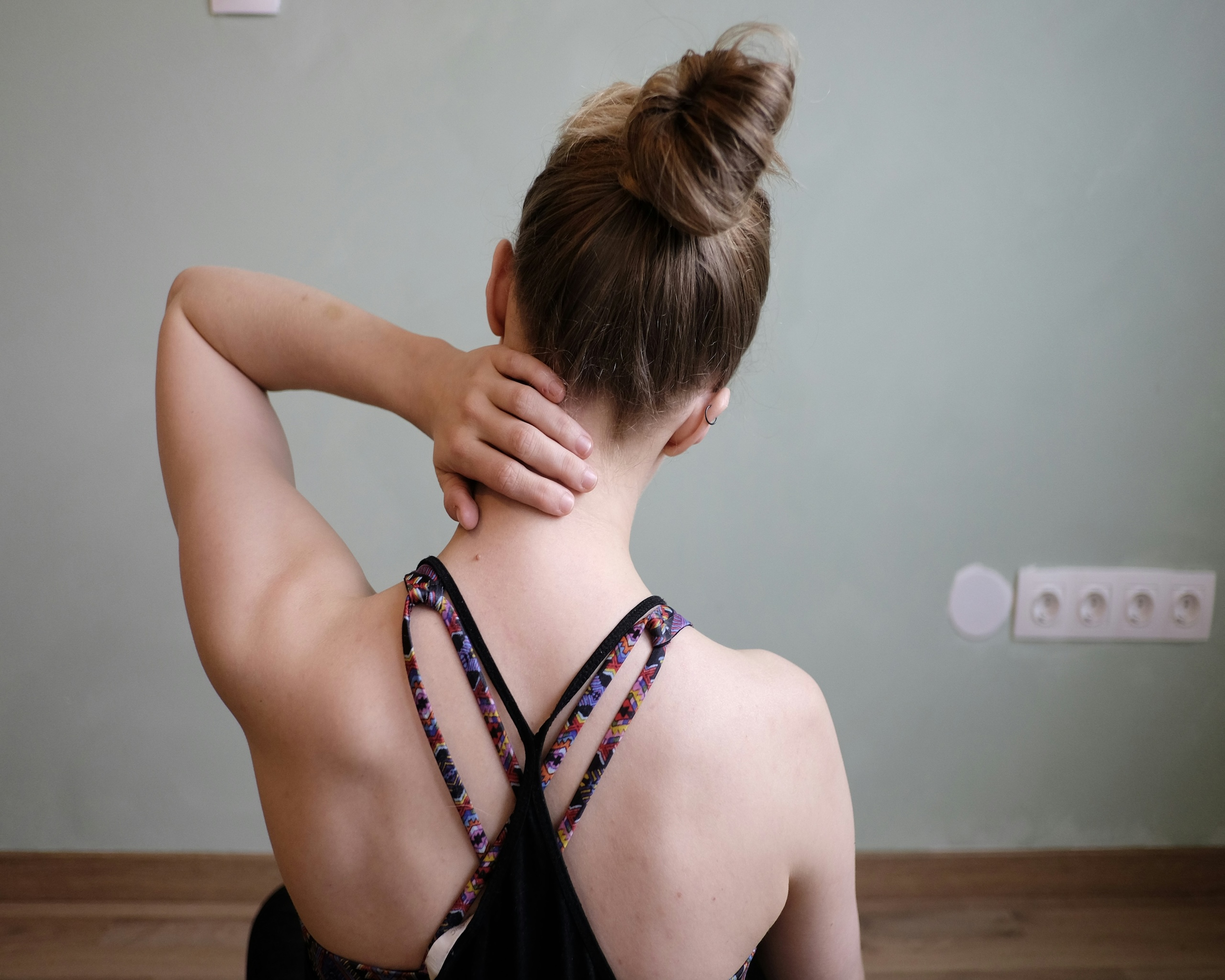
Do you carry stress in your neck and shoulders? I hear this concern from patients almost every day in my clinic. In this article, I’ll explain what causes this common problem and share simple, effective ways to fix it.

Chronic stress breathing can overload your neck and shoulder muscles — and most people have no idea it’s happening.
What Happens If You Ignore This
1. That dull, nagging ache becomes your “new normal.”
2. Headaches, jaw tension and poor sleep may start creeping in.
3. You get stuck in a cycle of shallow breathing, fatigue and ongoing pain (Conrad et al., 2007).
But When You Breathe Better…
1. You avoid unnecessary tension and feel lighter.
2. You reduce headaches and upper body stiffness.
3. You support your nervous system and feel more in control (Russo, Santarelli, & O’Rourke, 2017).
If you’re constantly ‘carrying stress’ in your neck and shoulders, what’s really happening is that you’re breathing from the wrong place. And the fix is easier than you think.
The 3 Biggest Mistakes People Make With Neck & Shoulder Tension
1. Breathing From Your Neck Instead of Your Belly
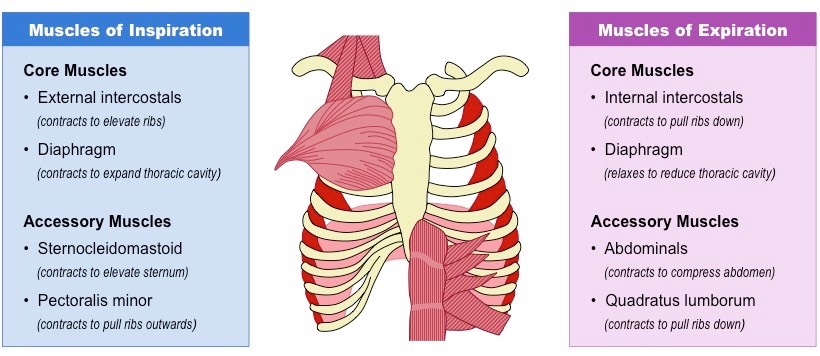
Your upper traps, scalenes and neck muscles a.k.a. accessory breathing muscles are designed to help during exercise or emergencies — not for all-day breathing.
Fix it: Practice diaphragmatic belly breathing. This activates your primary breathing muscle — the diaphragm — and takes the pressure off your neck.
2. Staying Stuck in “Fight or Flight” Mode
When you’re stressed or anxious, your nervous system goes into high alert. This causes shallow, rapid breathing and excess muscle tension — especially in the neck and shoulders (Lehrer, Vaschillo, & Vaschillo, 2000).
Fix it: Slow, deep breathing helps flip the switch into “rest and digest” — your recovery mode.
3. Trying to Stretch It Away Without Fixing the Cause
Stretching may give short-term relief, but without retraining your breathing and posture, tension always returns.
Fix it: Combine hands-on treatment, breath retraining, and nervous system support for long-lasting results.
Try This Tonight
1. Lie on your back.
2. Place your hands on your belly.
3. Inhale slowly through your nose. Focus on raising your hands upward.
4. Exhale gently through your mouth.
5. Repeat for 10 slow breaths.
Avoid chest and shoulder movement — they should stay still.
🎥 Watch me demo this on Instagram: @baseline.osteo
How Can an Osteopath Help?
An osteopath can:
- Diagnose any other underling issues that may be contributing to your neck and shoulder tension.
- Provide hands-on treatment to reduce tension in the accessory breathing muscles.
- Guide you with further tailored exercises to prevent recurrence.
At Baseline Osteopathy, we treat this daily — and we’ve helped plenty of patients shift their baseline to a pain-free, and more balanced body.
👉 Click here to book your appointment: https://baseline-osteopathy.au4.cliniko.com/bookings
References
Courtney, R. (2009). The functions of breathing and its dysfunctions and their relationship to breathing therapy. International Journal of Osteopathic Medicine, 12(3), 78–85. https://doi.org/10.1016/j.ijosm.2009.04.002
Russo, M. A., Santarelli, D. M., & O’Rourke, D. (2017). The physiological effects of slow breathing in the healthy human. Breathe, 13(4), 298–309. https://doi.org/10.1183/20734735.009817
Lehrer, P. M., Vaschillo, E., & Vaschillo, B. (2000). Resonant frequency biofeedback training to increase cardiac variability: Rationale and manual for training. Applied Psychophysiology and Biofeedback, 25(3), 177–191. https://doi.org/10.1023/A:1009554825745
Hodges, P. W., & Gandevia, S. C. (2000). Activation of the human diaphragm during a repetitive postural task. The Journal of Physiology, 522(1), 165–175. https://doi.org/10.1111/j.1469-7793.2000.00845.x
Conrad, A., Müller, A., Doberenz, S., Kim, S., & Meuret, A. E. (2007). Paced respiration affects immune function during and after stress. Psychosomatic Medicine, 69(8), 688–696. https://doi.org/10.1007/s10484-007-9034-x