Do you have hip pain that just won’t go away? You’re probably thinking there’s no way it could be stemming from your shoulder. Here’s why it could be.
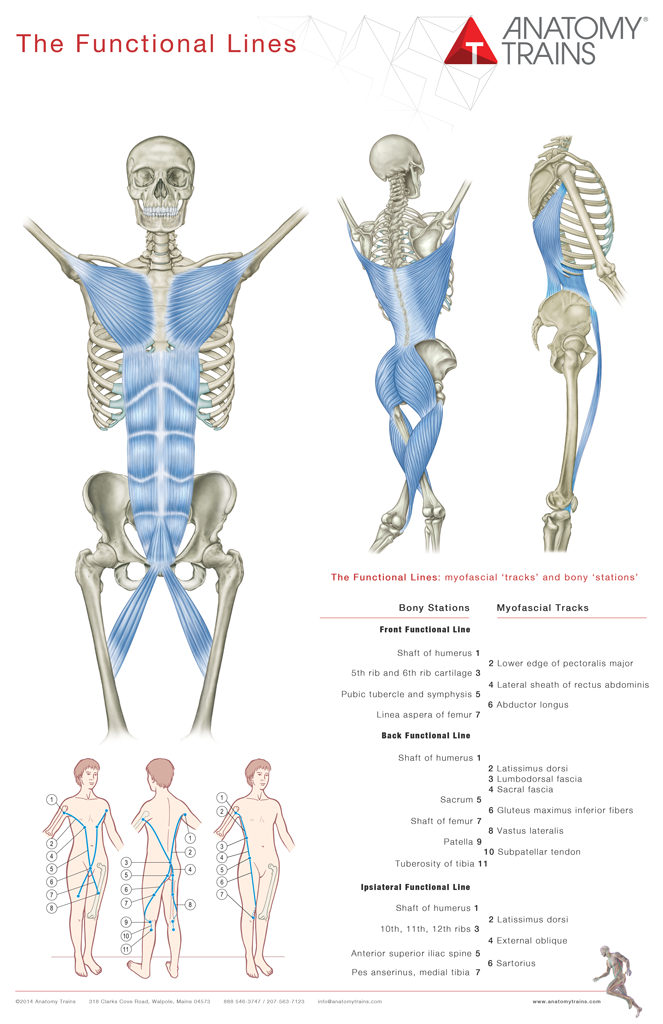
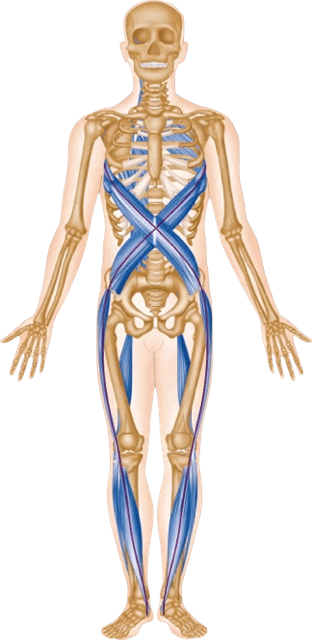
Our bodies have a chain of muscles and connective tissue that link the shoulder and opposite hip — together, they’re known as the anterior sling. It plays a vital role in walking, throwing, and twisting. When this sling is disrupted (like after an old shoulder injury), the opposite hip may be forced to compensate, often resulting in pain or stiffness.
Why ignoring your body’s movement patterns can worsen hip pain
If an old shoulder injury is left untreated, your body may adopt altered movement patterns that increase strain through your hip joint. (Hodges et al., 2003).
This can show up as persistent hip pain, stiffness during walking or stairs, or difficulty with sports.
Unfortunately, these adaptations can become harder to reverse the longer they’re left unaddressed. Often, this will lead to a slower recovery and higher risk of further injury.
How improved muscle coordination can ease your hip pain
When your anterior sling is active, your hips and shoulders work together, reducing strain and improving efficiency (Oliver & Weimar, 2015).
Movements like walking, twisting, and throwing will often feel easier and more powerful.
The sooner that shoulder issue is addressed, the quicker you’ll be able to recover from your hip pain.
Nearly all shoulder movement begins in the hip. Try throwing a ball as far as you can while seated — you’ll quickly realise how strong the relationship between these two joints really is.
What you need to know about shoulder issues causing hip pain
Why Treating Just the Shoulder Isn’t Enough
It’s common to focus solely on the injured shoulder, but research shows that shoulder dysfunction — especially involving poor motor control or excessive external rotation — can cause compensatory changes all the way down to the hips.
When shoulder range of motion or torque is impaired, your body looks elsewhere to generate power, often overloading the opposite hip through the anterior sling system. This compensation increases the mechanical demand on the pelvis and lower body during walking, throwing, or other activities (Joseph, Pappas, & Rees, 2014; Robb, Laudner, & McLoda, 2010; Scher, Sauers, & McHugh, 2010).
Pelvis position matters more than you think
Shoulder dysfunctions — like restricted movement or altered rotation strength — may change our pelvis position on the opposite side. The body tries to compensate by rotating the trunk and pelvis abnormally, shifting load to the hip and lower back. This imbalance often goes unnoticed until hip pain develops on the same or opposite side of the shoulder injury (Boyle, 2011; Joseph et al., 2014; Hruska, 2015).
Rehab should address the whole body, not just the shoulder
The anterior sling involves coordination of multiple muscles — it’s not just about strength. Studies show that neuromuscular training focusing on pelvic positioning, diaphragm function, and core activation can improve both shoulder torque and hip mobility. Integrated rehabilitation addressing the trunk, pelvis, and hips alongside the shoulder is essential for lasting recovery and injury prevention (Oliver & Weimar, 2015; Tenney, Boyle, & DeBord, 2013).
It’s Time to Look Beyond the Injury Site
At Baseline Osteopathy, we see this pattern all the time — and we’ve helped many patients shift their baseline to create a pain-free and more coordinated body.
Click here to book your appointment: https://baseline-osteopathy.au4.cliniko.com/bookings
References
Boyle, M. (2011). Advances in functional training: Training techniques for coaches, personal trainers and athletes. On Target Publications.
Hodges, P. W., Richardson, C. A., & Davis, C. S. (2003). Trunk muscle recruitment patterns during walking in chronic back pain patients. Manual Therapy, 8(2), 92–102. https://doi.org/10.1016/S1356-689X(03)00067-1
Hruska, R. (2015). Pelvic torsion and its impact on spinal mechanics. Integrative Medicine, 14(2), 34–39.
Joseph, T., Pappas, E., & Rees, D. (2014). The relationship between hip and shoulder mobility and injury risk. Journal of Sports Science & Medicine, 13(2), 388–395.
Oliver, G., & Weimar, W. H. (2015). The lumbopelvic-hip complex and shoulder function: Neuromuscular considerations for rehabilitation. Journal of Athletic Training, 50(1), 109–117.
Robb, A., Laudner, K., & McLoda, T. (2010). Relationship between hip and shoulder range of motion in baseball players. Journal of Orthopaedic & Sports Physical Therapy, 40(8), 551–559. https://doi.org/10.2519/jospt.2010.3339
Scher, D., Sauers, E., & McHugh, M. (2010). The effects of limited hip rotation on shoulder torque and range of motion. The American Journal of Sports Medicine, 38(4), 814–818.
Tenney, S., Boyle, M., & DeBord, K. (2013). Diaphragm function and pelvic rotation: Implications for scapular mechanics. Manual Therapy Journal, 18(5), 349–355.